
Reinterpreting the Rebellion of 1837 in Upper Canada: a Transnational Maritime Perspective
Trevor Parsons
Abstract: Face aux invasions maritimes répétées du Haut-Canada lors de la Rébellion de 1837-38, le récit historique soufre, le plus souvent, d’une perspective purement politique ou diplomatique. Peu d’attention a été accordée par l’histoire navale aux incursions frontalières malgré que ce conflit s’avère de nature principalement maritime. L’affaire du Caroline, l’incident sur l’Île-Navy, la Bataille-du-Moulin-à-Vent et un grand nombre des escarmouches frontalières se placent mieux parmi les épisodes de l’histoire navale et maritime à l’intérieure de la plus grande historiographie du monde atlantique. Cet article analyse l’affaire du Caroline et les effets internationaux engendrés par les événements sur l’Île-Navy, ainsi que les autres échauffourées frontalières pour illustrer comment ils ont marqué la politique du Haut-Canada et les relations entre la province, la Grande-Bretagne et les États-Unis. Ces événements forment un élément précieux dans l’histoire des Grands Lacs, région transnationale, et illustrent comment la diplomatie, l’économie du bois, et le loyalisme se croisent en un événement unique dans l’histoire du XIXe siècle en Amérique du Nord.
Between 1780 and 1840 Upper Canada faced a crisis that challenged what it meant to be Upper Canadian and culminated what became known as the Rebellion of 1837-38. Loyalty to the state was tested not only by the clashes on the streets of Toronto but by the Caroline Affair and the border skirmishes that followed the rebellion. Despite repeated maritime invasions of the province, the historical narrative often suffers from a purely political or diplomatic perspective. Little attention has been paid by naval historians to the border incursions despite these incursions being primarily naval in nature. The Caroline Affair, the incident on Navy Island, the Battle of the Windmill, and many of the border skirmishes should be viewed as episodes in naval and maritime history within a larger history of the Atlantic world. This article analyzes how such naval incidents affected the politics of Upper Canada, and the relationship between the province, Great Britain, and the United States.
Upper Canada’s staple economy saw fur supplanted by agriculture and timber, both of which flourished under the protected market provided by Great Britain. Most historians rightfully stress the importance of wheat and flour as the main economic driver for the province, yet are only beginning to understand how the timber and lumber trade affected political and economic. Timber exports were a vital source of revenue for merchants and businessmen, providing “as much revenue as exports of wheat and flour.”1 The timber and lumber industries grew to such an extent that by the 1830s it were a “subsidiary to agriculture”2 in the settled, southern, and eastern regions of the province. In the areas where settlement was opening, particularly the Ottawa Valley and Georgian Bay-Huron regions, they were the major economic drivers ahead of agriculture.3
The timber industry grew exponentially in the years 1835-36, immediately preceding the Rebellion. During these two years, Upper Canada exported the largest amount of timber to Great Britain since the beginnings of the timber industry in the 1820s.4 While a financial panic was introduced to Canada from the United States in 1837, it did not impact the timber industry to the same extent as in Lower Canada as the Upper Canadian economy was less dependent upon it. The economic panic affected other sectors, such as wheat, more so than timber. Thus the potential loss of revenue from timber exports would not have inflicted the same economic woes as that of the loss of wheat.5 The continued success of the timber industry and its impact on Upper Canada seems to have been unimpeded by the Rebellion of 1837 and the resulting border conflict. Indeed Arthur Lower stated that the rebellion “was not of great consequence...it was an effect rather than a cause of the economic disturbances”6 that did occur in other sectors of the economy. In contrast, the rebellion itself did indeed have a significant impact on British markets and policy-making. Successive Whig governments under Lord Melbourne7 created multiple budget deficits and upon assuming the premiership, Sir Robert Peel8 looked at decreasing funding for the Royal Navy in an effort to bring the government budget back to surplus.9 Another potential policy change was the abolition of colonial preferences. Although not a direct consequence of the Rebellion, it nevertheless occurred during the same period adding to dire economic situation.
The Royal Navy itself was affected both directly and indirectly by the rebellion in Upper Canada and the debates that surrounded it. Traditionally historians disregarded this impact. According to naval historian William Clowes, “the ill-starred rebellion in Canada did not afford much for the Navy”10 but the rebellion put an immense strain on the Home Fleet. By 1839, the Royal Navy had transferred seven ships of the line to the Canadas, leaving only two in British home waters “to serve as a nucleus around which a battle-fleet might be collected in an emergency.”11 It was thought that the timber trade, so vital to Britain’s naval prowess, would “be materially diminished by the existing insurrectionary [sic] movements” afoot in the Canadas.12 Therefore the potential loss of timber from Upper Canada would have caused a great deal of stress to the British economy as the price of timber from Upper Canada, among other British North American provinces, was artificially lower compared to the largest timber suppliers in the Baltics, namely Sweden, Prussia, Norway, and Russia.13 Of Britain’s total timber imports, three-fifths originated from the Canadas with the remaining two-fifths from the Baltics.14 Furthermore, two-thirds of Upper Canada’s timber exports were destined for Britain and grew from £225,000 to £265,000 between 1830 and 1839, a 15% increase; in contrast timber exports from Sweden to Britain did not grow during this period.15 Roughly one-seventh of all British shipping was in some way connected to the timber industry. While Upper Canada exported less timber to Britain than Lower Canada, it nonetheless remained an important source for the mother country.16
An 1835 parliamentary committee on the timber trade with British North America had concluded that it was in the interests of Britain for the “continuance of the protective duties” which would otherwise cause the ruination of provincial economies if they were lifted.17 This is entirely in keeping with the imperialist sentiments of the day which saw the relationship of Great Britain to its colonies as one of a mother and her children. However this was not the only motive for preferential tariffs as a great number of British merchants had invested heavily in various public works schemes, including canals. Thus there was a continuous fear among merchants, particularly those with significant investments in Upper Canada, about a substantial decrease in the supply of timber to Britain which would negatively affect their profit margins.18 Upper Canadian timber “for the use of [the] royal navy, is a matter of the utmost importance”19 even in the aftermath of the Napoleonic wars and the reopening of the Baltic to British merchants after the continental blockade imposed by France. Merchants feared that if the British authorities did not act to prevent the loss of Upper Canada “a stagnation [would] ensue in the business of shipowners, ship-builders, and in the numerous mechanical trades generally which depend upon supplies of the raw material.”20 There were merchants, economists, and bankers, however, who opposed this mercantile inclination in the relationship between Britain and her colonies. The cost of maintaining preferential tariffs for Canadian exports amounted to a total of loss of £2,000,000 while the same imports from the Baltics would only cost British merchants and tax-payers £1,400,000. It was even claimed that the timber was not suitable for the construction of housing because it was “not adapted, either in size, strength, durability, or price for the woodwork of small house, for the beams, roof timbers, or other parts in which there is strain or exposure, it is considered totally unfit.”21 Thus what Philip Buckner calls Britain’s “maternal nursing,”22 or loyalty to her colonies, was clearly a divisive issue.
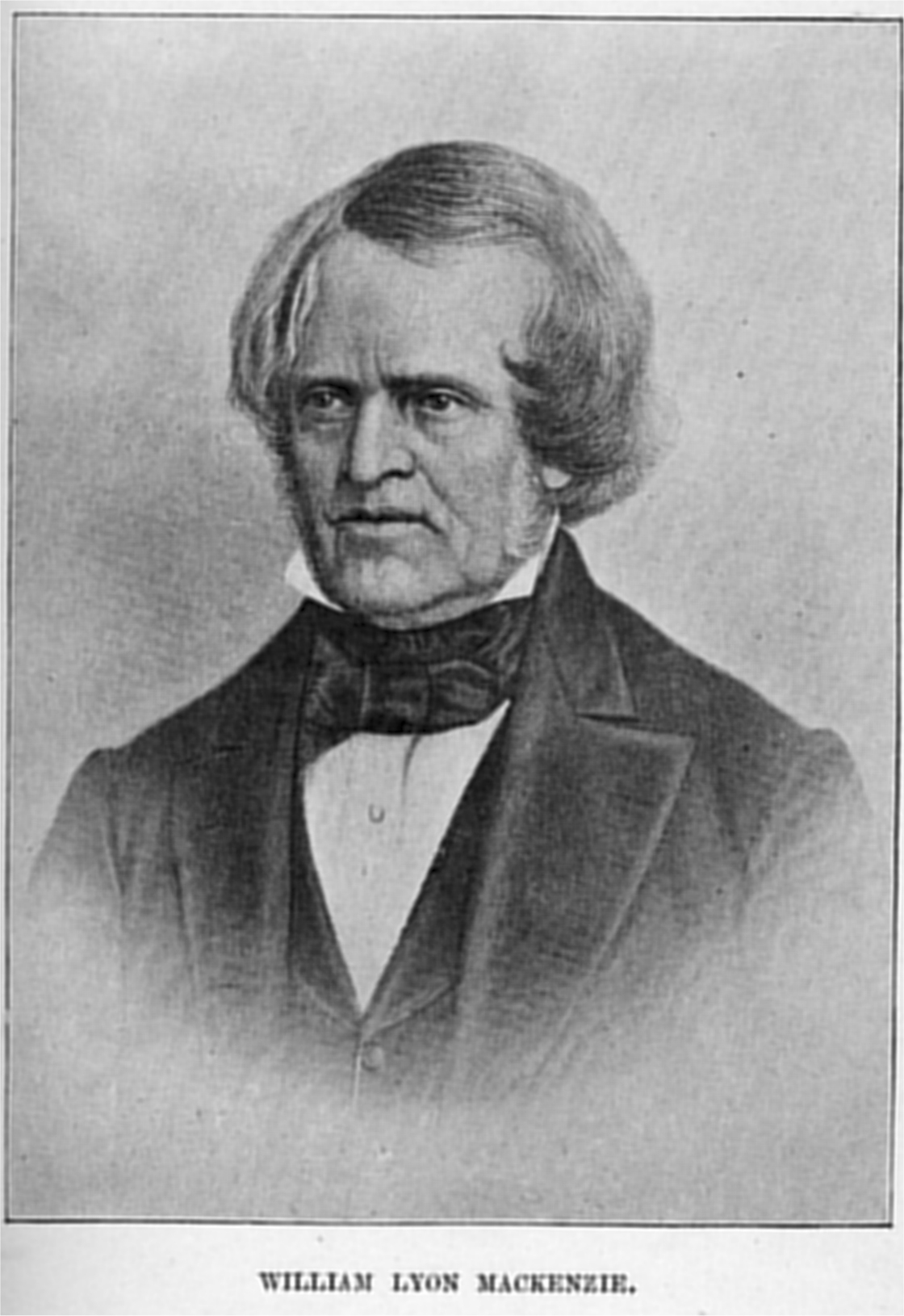
Equally as important as the timber trade during this period was the so-called canal “mania” during the 1830s, which was a means of both stimulating economic growth by creating a waterway for exports from Upper Canada to Montreal and the Atlantic. It was also a partial outgrowth of the fear of the nascent American canal system which threatened the commercial links between Upper and Lower Canada. It was feared that the Erie Canal would displace the St. Lawrence as it would allow goods to flow from the Great Lakes to New York via the Hudson River. The Rideau canal was begun in response to the American Erie canal, ensuring that goods flowed from the Great Lakes to the St. Lawrence, and was completed in 1832. Shortly after construction had begun on the Rideau, another was begun with the aim of connecting Lake Ontario to Lake Erie. It was not an undertaking of the provincial government like the Rideau Canal, however fears of American domination of it forced both Upper and Lower Canada into becoming its largest investors. Although these public works had the emphatic support of the Family Compact and moderate Tories and Reformers, more radical members including Mackenzie opposed these public improvements as contributing “a little more to the already overgrown influence of the crown”23 while neglecting other areas entirely.
Although Britons were eager to ensure the continuity of British rule in Upper Canada under normal circumstances, they also saw it as an economic necessity for maintaining Lower Canada as a means of ensuring the economic stability of the upper province. In reference to the potential loss of Lower Canada resulting from the rebellion, the Newcastle Journal wrote “they would of course close the St. Lawrence, excepting upon terms prohibitory of all trade; the Timber of Upper Canada could neither be floated down it as now, nor could manufactures of Great Britain be carried up by steamers...Thus England would lose a very material market for her Manufactures, and Upper Canada for its Timber.”24 Upper Canada’s geographic isolation and dependence on the St. Lawrence further complicated this situation. The issue of loyalty, colonial independence, and the possibility of Canada’s annexation by the United States resonated among British policy-makers. Lord Brougham25 lamented the inability of British merchants to access cheaper Baltic markets while maintaining a costly system of colonial preference for Canadian timber. Not only did he advocate the abolition of the corn laws and colonial preference, he claimed that Upper Canada should join other British North American colonies in becoming independent thus allowing “our markets [in reference to Britain] to the better and cheaper commodity which grows near our own doors...”26 This view exemplified those of British whigs and liberals who saw British North American colonies more a hindrance than a benefit.
However, not all parliamentarians shared this view with many conservative members arguing, in keeping with the mother-child relationship, that the abolition of such preferences would destroy the fragile and nascent growing economy in Upper Canada. Moreover, the loss of Upper Canada altogether would make Britain vulnerable to the whims of continental Europe and the Baltic timber states. It was also argued that if Britain were to re-balance the timber trade in favour of the Baltics, at the expense of Canada, “the increase of price would probably make that article fully as dear to the consumer as at present, without the advantage to the public of the duties now levied upon Baltic timber.” Moreover, if Britain were cut off entirely from Canadian timber and a diplomatic incident were to occur with the Baltic nations, “the supply of timber so essential to the English war and merchant Navy would be cut off” allowing “these countries...to a certain extent to dictate to England the terms on which she should be supplied.”27 This was not the only opinion expressed, other and arguably more practical arguments included the loss of forests along the Baltic coastlines. This view was advanced by Alderman Thompson who claimed that the timber industry in the Baltics was becoming more expensive as forests receded from the coastlines thus requiring more labour, infrastructure, and expenses to transport them to the coastal merchant cities.28
It was widely expected among Liberals and Whigs that if Great Britain were to acquiesce to granting Canadian independence as a result of the rebellion, that trade and commerce would carry on albeit without the tariffs which were viewed as restrictive towards British merchants.29 Indeed Henry Warburton went so far as to say that far “from Canada being a source of power, she was a source of weakness; for a colony in a state of revolt, and a people in a state of total disaffection and estrangement, could not, under any circumstances, conduce to the strength of the mother country.”30
The hypocrisy and the shift in attitudes towards free trade among liberals was noted by Sir William Molesworth who stated that “the Canada timber monopoly is a good example both of an abuse and an evil in colonial possession,” while also pointing out that “until late years, it was generally and seriously believed, that a colonial trade was of no value, unless it was in some way or another a monopoly trade.”31 The issue of free trade and the abolition of colonial preferences polarized British political discourse, but the perceived potential of such a policy in Upper Canada frightened many who saw the abandonment of colonial preferences as the abandonment of a British colony by the British political establishment.
The economic benefits of British commercial trade with Upper Canada were heightened when they were considered within a greater fear of American expansion; it was argued that if the British North American colonies drifted away from Britain and were granted independence, they would inevitably be swallowed by the American juggernaut in which case “most articles of British fabrication will not only be made subject to heavy duties but will be absolutely contraband” as it was widely accepted that the United States wished to surpass Britain as the primary commercial power on the Atlantic. The ultimate fear was “that the possession of the Canadas, the trade of the St Lawrence, the accession of Newfoundland and the Eastern colonies with the timber trade & fisheries, would place America suddenly in the desired position, of being a Naval power, of dangerous importance to England.”32 The argument that Britain’s naval dominance depended upon its British North American colonies proved to be a powerful one indeed.
The 1836 election in Upper Canada saw most moderates within the Reform movement unseated allowing radicals to assume roles of leadership. Their defeat at the hands of the Family Compact forced many Reformers to lose “faith in the political system and [they] were persuaded to follow William Lyon Mackenzie down Yonge Street in the abortive rebellion of 1837.”33 Following his electoral route, Mackenzie began publishing more and more inflammatory pieces critical of the Family Compact and of British policy in Upper Canada including the Declaration of the Reformers of the City of Toronto to their Fellow-Reformers in Upper Canada.34 He eventually pushed for a new constitutional convention in Upper Canada calling for independence from Britain. The use of extra-legal measures against such actions continued to the point where, by mid-1837, it “had become virtually impossible for reformers to hold lawful political meetings in the province.”35 The reformers in Upper Canada were not the only party to engage in political violence, the Tories engaged in what Lawrence Friedman termed “lawless law”, whereby episodes of lawlessness “take place ‘inside’ the legal system itself, or are aspects of the system.” The Family Compact, and the British authorities used “lawless law” as a means of defeating the Reformers in the 1836 election engaging in activities “that could normally be considered illegal.”36
According to Edward Alexander Theller, a leading participant in the failed rebellion, Mackenzie’s plan was to “march upon the city, and, in conjunction with the reformers who resided there, seize the governor, take the City hall, in which were four thousand stand of arms, distribute them among the people, take possession of the garrison, organize a provisional government, assemble the representatives of the people, and declare the province an independent republic.”37 While Mackenzie ultimately desired a union of Upper Canada with the United States, he recognized that a majority of Upper Canadians would never submit themselves to a republic that they were taught to hate and fear.38 The militia of Upper Canada were called upon in defence of “Queen, country, and constitution” causing hundreds, and eventually thousands, to join in the defence of their colony from a perceived foreign threat of invasion; over 2,000 men joined the provincial militia seeking to find the rebels who had scattered after the defeat at Montgomery’s Tavern.39 Toronto residents welcomed the dispersion of the rebels and when loyalist volunteers entered the city, they did so “admist [sic] the warm congratulations of the population who consider themselves free from any molestation from Mr. Mackenzie and his murderous and lawless gang.”40
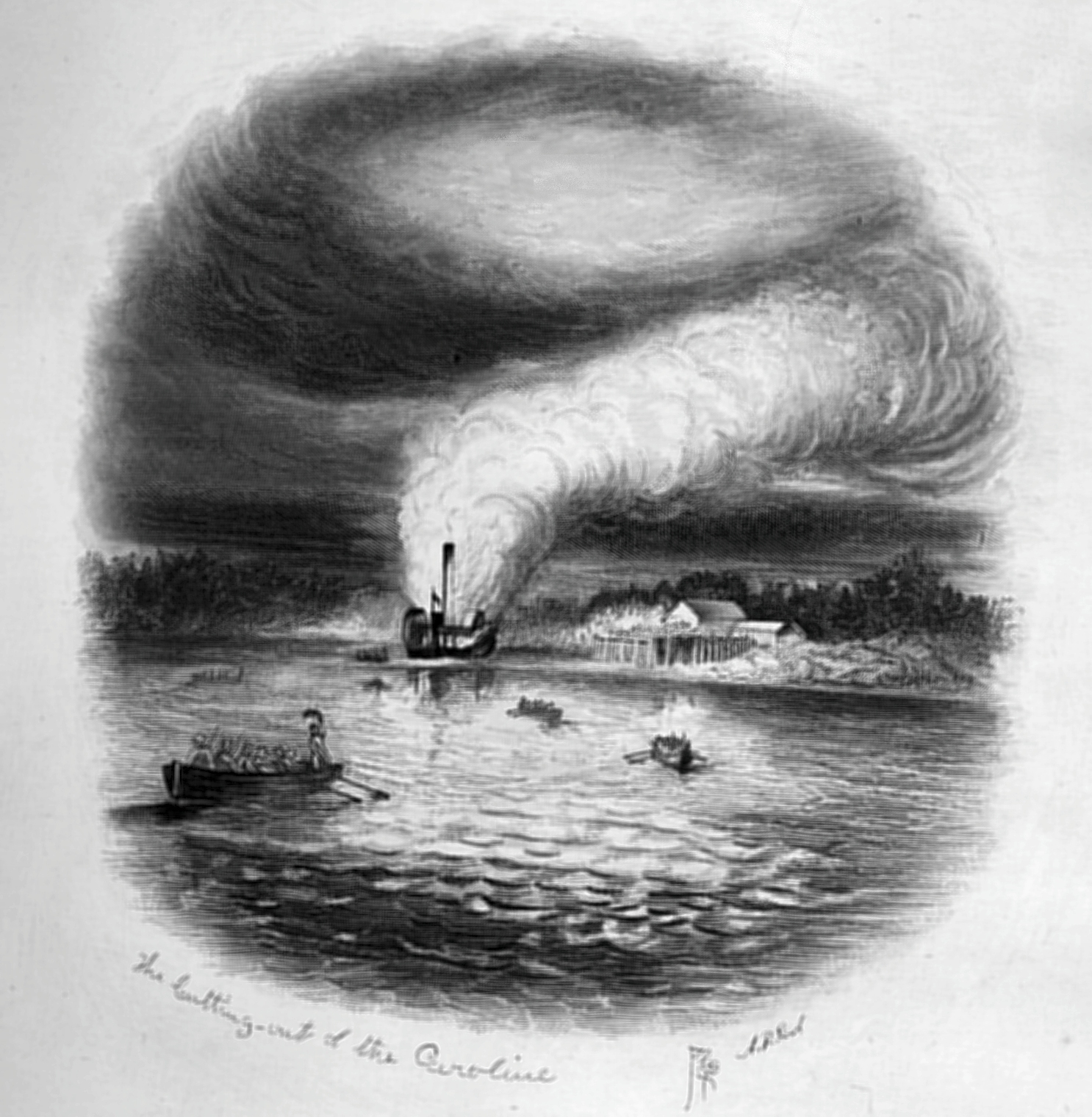
Following the dispersal of Mackenzie’s followers at Yonge Street in Toronto, the rebels fled to the relative safety of the American side of the Niagara frontier from where they invaded and seized control of Navy Island, undisputed Upper Canadian territory. The participants lodged on the island were a mixed force of Canadian rebels, and American sympathizers who heeded Mackenzie’s call to arms in resisting the tyranny of the British and Upper Canadian governments. The rebels were supplied by the SS Caroline owned by a Buffalo resident and sympathizer to the patriot cause. Although its owner claimed that the vessel was not carrying arms and volunteers to Navy Island, Luke Walker, an American citizen on board the Caroline during the incident, reported that the Caroline was indeed the “property” of the rebels, and that it was carrying provisions to them on the island.41 Acting on advice from Niagara’s sheriff, Alexander McLeod, the commanders of the Canadian militia sought to put down the rebellion on the island and ordered the capture and destruction of the vessel carrying arms to the rebels.
Witness Gilman Appleby of Buffalo, Captain of the Caroline, claimed that not only were all passengers American citizens, but upon boarding the vessel the Canadian militia “immediately commenced a warfare” with a “fierce cry of ‘God damn them, give no quarters,—kill every man, Fire! Fire!’”42 The Americans on board attempted to “escape slaughter” by the Canadians who “murdered” almost two dozen of the passengers. It was also claimed that the Caroline was set on fire, then adrift, eventually being swept over the Niagara Falls with injured men still aboard.
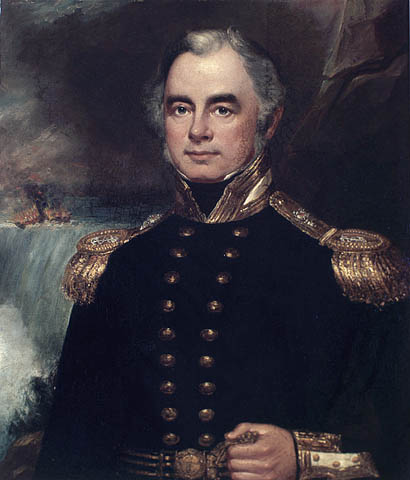
Captain Andrew Drew43, an officer in the Royal Navy who emigrated to Upper Canada after being put on half-pay, was charged with the mission to destroy the Caroline. He had joined the provincial militia and was transferred to the provincial marines because he was one of the few naval officers who lived in the colony. Drew’s account of the Caroline differed, stating that he was under orders from Allan MacNab, commander of the provincial militia, to “burn, sink, or destroy” the vessel and having boarded the vessel, moored for the night under Fort Schlosser on the American shore below Navy Island, it took only two minutes to overpower the crew. Americans who did not resist were released and those who “assailed us were of course dealt with according to the usages of war” although nobody had been killed.44 The Caroline was released from its moorings, set aflame and then adrift. Drew would reiterate this claim in his retrospective account of the incident with a degree of consistency, including the fact that he had made great efforts to ensure that nobody was left aboard; however, his A Narrative of the Capture and Destruction of the Steamer ‘Caroline’ is a slightly romanticized account of the events, written a quarter of a century later.45 His narrative also claims a fiery Caroline going over the Falls on the Upper Canadian side, an hour or more after being set adrift. Given the steamer’s draft, the currents and shoals, it is much more probable that the Caroline broke up, with possible burning remnants providing the spectacle.46
Upon learning that American participants were actively involved in the fighting on Navy Island and engaged in a conflict with British authorities, US president Martin Van Buren called for calm and for all American participants to return to their homes awaiting a diplomatic solution to the crisis.47 Congress passed what became known as the Neutrality Bill which would provide penalties for Americans who violated the neutrality of the United States in the affairs of other states. It was seen as the only way to prevent the further supply and “conveyance of arms and ammunition” from the United States into Canada.48 This did little to assuage the fearful Upper Canadians or the Americans on the New York frontier until the president acted more forcefully issuing a proclamation calling for American participants to return home and threatening those who stayed with “prosecution under U.S. law or lack of U.S. support should they be captured by British authorities.”49 It was implied that Americans in breach of neutrality would prefer a sympathetic jury in New York to a military tribunal orchestrated by the British military. Van Buren’s desires for peace earned him the antipathy of many rebels and sympathizers such as Robert Marsh who referred to the president as “a Queen ’s man.”50 Senator Henry Clay as leader of the Whigs referred to the Caroline as an “atrocious outrage.”51 President Van Buren was in a difficult position because, even if he succumbed to popular demand for retaliation against Upper Canada, half of the permanent US army was already engaged in a conflict with the Seminoles in Florida.52 The fear of open warfare on the frontier coupled with the popular desire for a retaliatory strike against Upper Canada amongst Americans created an air of diplomatic tension between Upper Canada, Britain, and the United States.
It was thought amongst British and Upper Canadian officials alike that the capture and destruction of the Caroline had stifled support for the rebels along the border-states with anger over breach of US sovereignty overtaking any revolutionary sympathizes held by Americans in New York, Michigan, Vermont and Ohio. Such thinking was overly optimistic and Americans across the Niagara frontier were outraged at the violation of their sovereignty. The Caroline caused such vehemence in New York that public meetings were held throughout the state seeking redress for the destruction of the American vessel. At such a meeting in Plattsburgh, the acts of the Canadian militia were regarded as an “an insult” to the “National character” of the United States. The patriots, it was said had their “warmest sympathies”53 and demands were made for the liberty and self-government of the people of Upper Canada. It was also reported that volunteers from across New York were flooding to the Niagara region to assist the Canadians in their struggle against British tyranny.54 One Buffalo newspaper published the following:
It is our deliberate conviction that it [is?] every good man’s duty to do all in his power to sweep this murderous tyranny from the western world. To accomplish it, almost any measures are justifiable. We have no patience with the blood wretches, and, as much as we abhor assasination [sic] it would almost justify it in freeing the world from such monsters. Where are those Canadians who swore to avenge the death of every patriot prisoner? Macnab, and Drew, and Arthur, and Prince, and Hagerman, and Robinson, are still alive...55
The Caroline affair caused a significant strain in Anglo-American-Canadian relations that was unparalleled since the War of 1812. “My impression” George Arthur wrote, “is that they will not rest until they have had what they term their revenge for the affair of the Caroline, by destroying some one or more of our Vessels in our Harbours or on our Lakes.”56 American officials in Buffalo were equally as concerned to prevent the outbreak of any retaliatory violence against Upper Canada. Indeed the district attorney of Erie County, H.W. Rogers, was so fearful that he called for the sheriffs in the region to patrol the border along with the state militia.57 Thus the Caroline affair only seemed to confirm the worst fears of Upper Canadians; that the colony was facing an existential threat externally, from the United States, and internally, from perceived republican and American sympathizers in the Reform movement seeking to detach the colony from the mother country.
The outbreak of the rebellion coincided with the closure of the last British naval station on the Great Lakes. As a cost-saving measure by the newly elected Whig government in Britain, the Great Lakes Naval Establishment was ordered closed in June 1834 before it officially closed two years later in 1836. This action had left the British naval presence on the Great Lakes in shambles as “all the...ships and vessels, sloops, schooners, gun-boats, and boats remaining at the station” were to be sold although most ships were in an advanced state of disrepair and the Niagara was considered “unfit for service” and “condemned.”58 The naval station was not reopened until April 1838 when Captain Williams Sandom arrived in the province at the behest of colonial authorities to reestablish a Provincial Marine reporting to the Provincial Militia. Sandom was not popular in the province or among his men who thought he had an “ungovernable temper.” Although he arrived rather late into the conflict, Sandom seems to have been jealous of the accolades received by his contemporaries, Colonel Henry Dundas and Captain Andrew Drew, both of whom received awards from the provincial and British governments. Dundas had repelled the invasion of Prescott, and Drew had destroyed the Caroline.59 This jealousy boiled over when Sandom attempted to discipline Drew who proceeded to request a court martial where he was acquitted.60
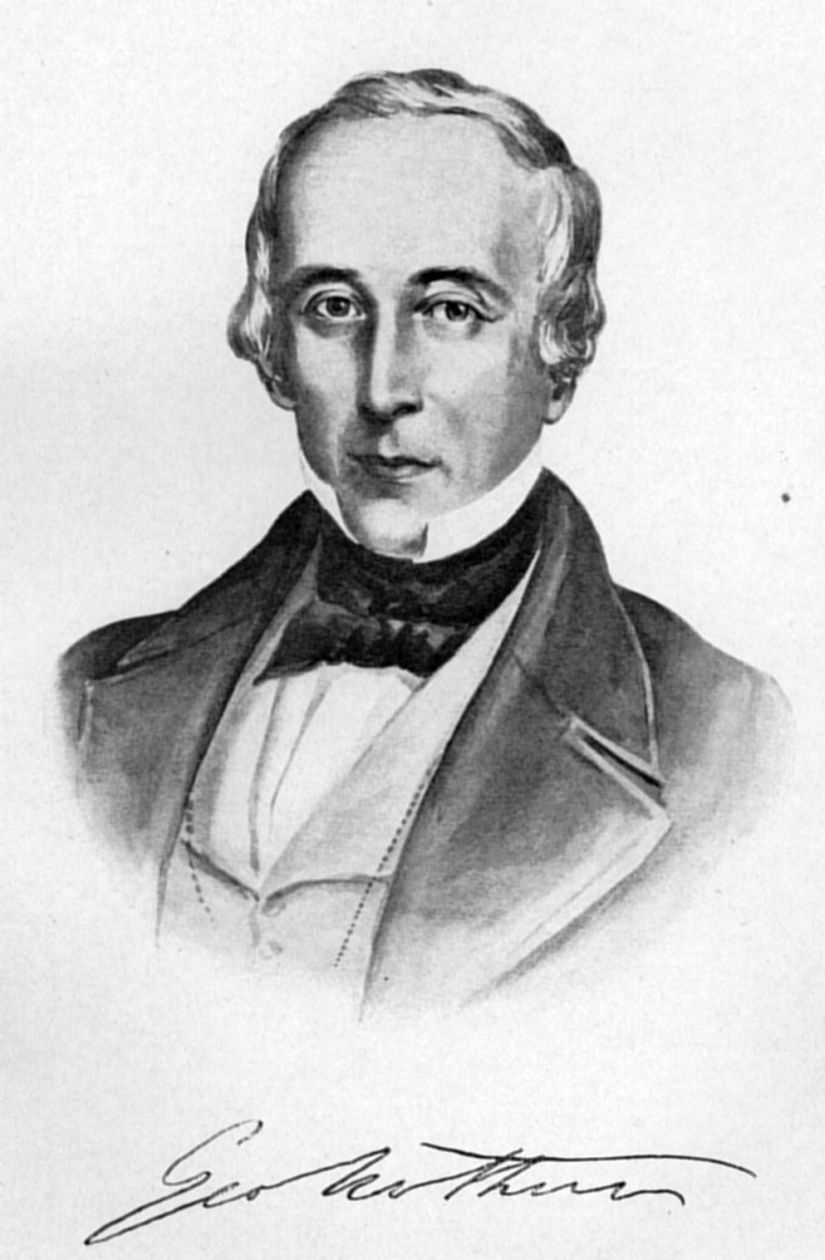
As such, the ideology of loyalism remained a key element amongst those, such as Allan MacNab and Andrew Drew, seeking to defend Upper Canada from the rebels. Governor Arthur’s biggest fear was a maritime invasion of the province and urged the militia to patrol Lake Erie and Lake Ontario in response.61 His chilling claim that Americans would seek to avenge the Caroline proved prescient. In February 1838, American sympathizers invaded Hickory Island near Kingston under Rensselaer Van Rensselaer, the former “general” in command at Navy Island. An invasion of Fighting Island was repelled when a group of rebels and Americans attempted to cross the Detroit River. The fears of American involvement were further fanned when it was found that the weapons left by the invaders had US Army markings. Another battle was fought at Pointe-au-Pelée followed by the raid at Short Hills. Each time the invasion was routed and the rebels were forced back into American territory or captured.62 The Canadian steamer Sir Robert Peel, was boarded late May 1838 by American “pirates”, led by Bill Johnston, now promoted “Commodore of the Patriot Navy”, and Donald McLeod, who plundered and then destroyed the vessel in retaliation for the destruction of the Caroline. Although the leaders responsible, excepting Johnston, were eventually captured by American officials, they were acquitted of their charges.63 The Caroline and Sir Robert Peel affairs together with other numerous incidents strengthened feelings of loyalty in Upper Canada.
From a naval perspective, the Upper Canada Rebellion was, for the most part, a purely maritime affair, yet the absence of the Provincial Marine has been overlooked during the early part of the rebellion. In order to combat potential patriot raids or an invasion from the Hunters’ Lodges, British authorities were forced to rearm the Great Lakes in potential violation of the Rush-Bagot Treaty. The Royal Navy purchased several schooners and steamers and then proceeded to arm them. One such steamer was the Toronto which was used to protect Sarnia and Lake Erie. The Bullfrog was also purchased but records are unclear as to where and how it was used. Additionally ships were chartered and armed in the same manner including the Cobourg and Queen Victoria. Upper Canada’s defence was not the sole responsibility of the militia or the British army, indeed a Royal Navy Lakes Service had existed from the War of 1812 until ordered closed in 1834 and was charged with the defence of the colony’s coastlines. However the Rush-Bagot Treaty of 1817 had practically demilitarized the Great Lakes, only allowing a single ship from each nation to patrol their respective territorial waters. Throughout 1838, the Provincial Marine was effectively neutered from being able to defend the colony from any maritime incursions into the province. In fact, Captain William Sandom, “naval officer in command of the lakes” was forced to rent “two or three sailing schooners”64 for use by the marines. The Upper Canadian government chartered an additional two steamers to supplement the force.
The final incursion into Upper Canada took place at Windmill Point near Prescott. The Hunters’ Lodges launched a maritime invasion of the province which was defeated by the Provincial Marines under Sandom who had been ordered to defend Prescott and the St. Lawrence from such an invasion.65 Several steamers and schooners were used by the Hunters in the attempt to transport between 400-600 men from Mullins Bay in New York to invade the town of Prescott. HMS Experiment, purchased by the Royal Navy in 1838, was used to route these ships – the United States and Paul Ply. The Paul Ply was successfully chased back into US waters while the United States was, after a short volley, boarded and captured by HMS Experiment. The Americans who were able to land at Prescott were quickly defeated by the militia. Again, the British government whole heartedly supported the actions of the Royal Navy under the pretext that the United States had violated British/Upper Canadian territorial waters.66
Initially it was thought that the disturbances were American in nature, both indirectly through Mackenzie ’s republicanism and directly through the free flow of American immigrants to Upper Canada in the preceding years. To some in Upper Canada, the only way to stem the tide of American immigrants into the colony was to close its border entirely. Jane Errington summarized this feeling amongst certain members of society that the presence of Americans in Upper Canada “[contaminated] the colony with political and social principles which were antithetical to the British constitution.”67 This view, however extreme, was viewed as unrealistic considering the demographics and the perceived loyalty of many American-born residents during the War of 1812. These anti-American sentiments were not restricted to the Family Compact but there was a predisposition towards these attitudes amongst their supporters including Sir Francis Bond Head who claimed that Americans in Upper Canada could not be trusted and were innately disloyal because of the predominance of republicanism amongst them. American influence on the reform movement, and eventually the rebels, was facilitated through a “daily intercourse” between Upper Canadians and Americans which “kept constantly before their eyes the advantages of self government.”68 To the moderate conservatives who took the reigns of power in Upper Canada following the rebellion, the reformers were a mere symptom of the larger problem, the menace of the United States. To them, this “Foreign Nation”69 was the direct cause of the rebellion and discord in the province.
By March of 1838, the immediate hazard of a retaliatory strike against Upper Canada by the United States had passed although it was widely recognized that the rebellion in the province and the Caroline affair had created a rift between Britain and the United States which required mending.70 Rampant speculations and rumours of an invasion of Upper Canada were rife, with estimates of over 40,000 rebels and sympathizers ready to enter the province at any time although these appear to have been grossly over-exaggerated. The number of Canadians who fled across the border into the United States is unclear, however the Upper Canadian government estimated that “about two thousand persons” left the province and had “taken up their resident in the frontier Towns on the American Side” of the border.71 The skirmishes did not last as it was widely believed the presence of General Winfield Scott on the frontier prevented any large-scale actions on the part of American citizens against Upper Canada. Upon inspecting the Canada-US border, General Scott who was ordered to the frontier by President Martin Van Buren remarked to Governor Arthur that the violence had for the most part subsided but “that small parties of desperadoes may attempt to escape from our side of the line to yours for the purpose of taking a part in such troubles.”72 The state militia of New York was federalized and put under the command of General Scott on the suspicion that General Brady, its initial commander was not only overtly supportive of Mackenzie and his followers, but actively discharging any rebel or sympathizer that was caught by his forces.73 This proved of little consequence as General Scott was also sympathetic to the plight of the patriots – writing to a friend wishing them divine success and expressing that his “heart” was with “the oppressed of both Canadas.”74 Sympathy in itself was not enough to warrant any claims that the US government was secretly planning an invasion of the province, which was a widely held belief in Upper Canada.
Sir Francis Bond Head was acutely aware of the danger posed by the rebels who retreated into the border states in the aftermath of the unsuccessful rebellion. He surmised that “if our invaders could but over-power us on the frontier, the Province would immediately be overwhelmed...robbing and murdering the loyal…[and] would take possession of the fastnesses of their country...before the ice should break up and allow any succour from England.”75 It was confirmed that Americans in the borderlands of New York and Vermont were displaying an anxiety and eagerness to enter as partisans in the contest against the British Government. Public meetings were also held in other communities such as Oswego, Ogdensburg, Lewiston, and Buffalo.76 The British administration in Upper Canada was worried about the infiltration of sympathizers into the state governments of New York and Michigan, indeed it was expressed by George Arthur that the governors of these states desired to assist the patriot cause.77
Generally, Americans in New York were of the opinion that Canadians were oppressed by the British regime and deserved independence, but were generally in favour of neutrality, at least when it came to intervention in the rebellion:
The Americans generally, and our frontier neighbours particularly, know that when an attempt at insurrection was made last year, the people of this Country put it down, without the aid of a single British soldier: and they do not believe, that a people who would not accept republican institutions, when no impediment to such acceptance existed, would declare themselves favourable to these republican institutions, when the Country is filled with armed men, and soldiery, resolved to perish, rather than submit to their introduction.78
However, there was a marked shift in general opinion following the Caroline incident. As Canadian refugees poured into the United States, Hunters’ Lodges were formed for the express purpose of preparing “to invade and conquer Upper and Lower Canada, to subvert and revolutionize the established Government of those Provinces, and to wrest them from the rightful dominion of the British Crown.”79 The Hunters’ Lodges – a “secret society”, influenced by free masonry, with estimates of forty to two hundred thousand members, advancing the patriot cause with the nascent support and sympathies of state militias – were of a particular concern as senator Daniel Webster reported that these lodges were established across the frontier from Cleveland to Burlington “embracing two or three members of congress.”80 The lodges drew their support from Americans and their “indignation over the Caroline affair”81 but not all Americans embraced the patriot cause, some were weary of blindly embracing the call of revolution wherever it emerges. One New Yorker stated that “the fact that a government is a monarchy is no argument for its overthrow,” going even further in stating that British policy in Upper Canada “in the past fifty years, has consisted in efforts to improve the condition of the country and its people.”82 This anonymous writer recognized the loyalty of a majority of Upper Canadians to Britain, and warned that any war would most certainly foist the Royal Navy on American ports thereby causing economic ruination.
The response from New York or Michigan was mute, however, as Upper Canadians and Britons awaited a response from the federal government in Washington. War, it appeared, was a distinct possibility and could only be averted if Martin Van Buren had “the power to enforce obedience to law and the executive.”83 While governor William Marcy decried the invasion of his state and the murder of American citizens, he “felt an anxious solicitude to maintain the relations of peace and strict neutrality” adding that the circumstances of the events surrounding the Caroline “[furnished] no justification for the hostile invasion”84 of New York. New York’s solution was fairly unique, the legislature passed a new bankruptcy law which would “discharge people who chose to take benefit of it from their debts.” Since it was assumed that the American participants were “vagabonds”, “a discharge from their debts would, therefore, enable them to resume their former mode of life.”85 Although Sir Francis Bond Head had demanded that Governor Marcy hand over Mackenzie for his treasonous acts, the governor refused on the basis that Mackenzie was charged with a “political offense” which was “excepted by [US] law.”86 The relationship between Upper Canada, Britain, and the state government in New York remained fairly tense for the remainder of Marcy’s governorship.
Sir Robert Peel, in response to the Caroline affair, avoided further provocations, even signaling a willingness of a “peaceful separation of Canada from Britain in certain circumstances.”87 The general feeling for war and for the annexation of Upper Canada was felt most along the border states whereas southern states would be opposed on the basis of Upper Canada’s anti-slavery sentiments, and New England’s commercial interests in maintaining peaceful trade relations with Britain.88 The British minister in Washington, H.S. Fox, was of the opinion after consulting with various officials that there was no “thought or intention” of war on the part of the American government:
They neither desire, nor dare, to go to war with us. But they hope, by continuing their present conduct, the multitude making war while the Government professes peace, to obtain Canada without the risk of a national war. They expect, to use an expression I believe of your predecessor Sir F. Head to “hustle us out of Canada. And it is partly by the fault of our own countrymen at home, that this hope and delusion is indulged in.89
Governor Arthur in Upper Canada, however, remained apprehensive and distrustful of American intentions following the Caroline believing that while the American government was openly preaching a desire for the maintenance of peace, it was secretly preparing a declaration of war against Britain, “the object...would no doubt be to pour an overwhelming force into Canada.”90 Arthur was generally dismissive of American intentions stating that “the Institutions of the Untied States render them unsafe neighbours for other nations: they have before shown themselves so to Mexico.”91 This was, after all, the age of manifest destiny and even though this term was not in usage, it was widely believed that Canada was destined to become part of the United States, regardless of the opinion of its inhabitants. British and Upper Canadian authorities were particularly concerned given the nature of American politics; they feared that while its government may legitimately desire peace, its dependency on popular support, and a majority of voters, meant that it was sometimes incapable of pursuing a policy unpopular with a large number of its citizens.92
Settlers on both sides of the border in Upper Canada, New York, and Michigan, often had families in both Canadian and US territory who continually crossed the frontier as a transnational population; moreover, “regardless of citizenship, many residents in this region took a keen interest in its public affairs and in its future”93 thus making the boundary seemingly unimportant. Combining this to the political disputes between Reformers and Tories created a “perfect storm” of variables leading to a crisis of loyalty in Upper Canada. While it cannot be entirely ascertained, the extent to which Upper Canadians were loyal to Britain and opposed to the rebel cause depended largely on the region of the province in which they resided. London in the western most region was decidedly disloyal as was Niagara although it was once considered to be a bedrock of loyalism. In central Upper Canada, Toronto was once considered a bastion of the Family Compact and therefore loyal. To the east, the district of Victoria around Belleville had “republican” sympathies while the district of Prince Edward was “unsurpassed by any other portion of the People of Upper Canada in moral character and Loyalty.”94 The government of Upper Canada sought to make the bonds between Upper Canada and Britain “indestructible”95 through a policy of emigration of Britons from the mother country as a means of maintaining the monarchical bond.
The Caroline affair continued to interfere in Anglo-American relations well into the early 1840s with Daniel Webster continually protesting the breach of US sovereignty over “the justifiability or unjustifiability [sic]”96 of British actions. The British foreign office argued, and Upper Canadians believed, however, that justifiability was an entirely valid argument since the Caroline was used for the rebel’s supply of arms and munitions and was engaged in armed conflict against the colonial government; therefore they had every right to “retaliate war for war.”97
The American government consistently argued that only Americans directly caught in the act of fighting could be punished and that any materials en route to the island were “immaterial.”98 The skirmishes ended and eventually relations between the three parties improved and were confirmed by the Webster-Ashburton Treaty of 1842.99 However the crisis of loyalty felt in Upper Canada made the colony, as a singular unit, quasi-ungovernable. The immediate threat of the loss of Upper Canada to the United States waned as political order was reestablished following the assumption of Lord Durham to the governorship of the Canadas. Although disloyalty continued to simmer, the end of civil upheaval allowed the province to emerge ever strong as the foremost colony in British North America.