
New vessels for ice navigation in Canada
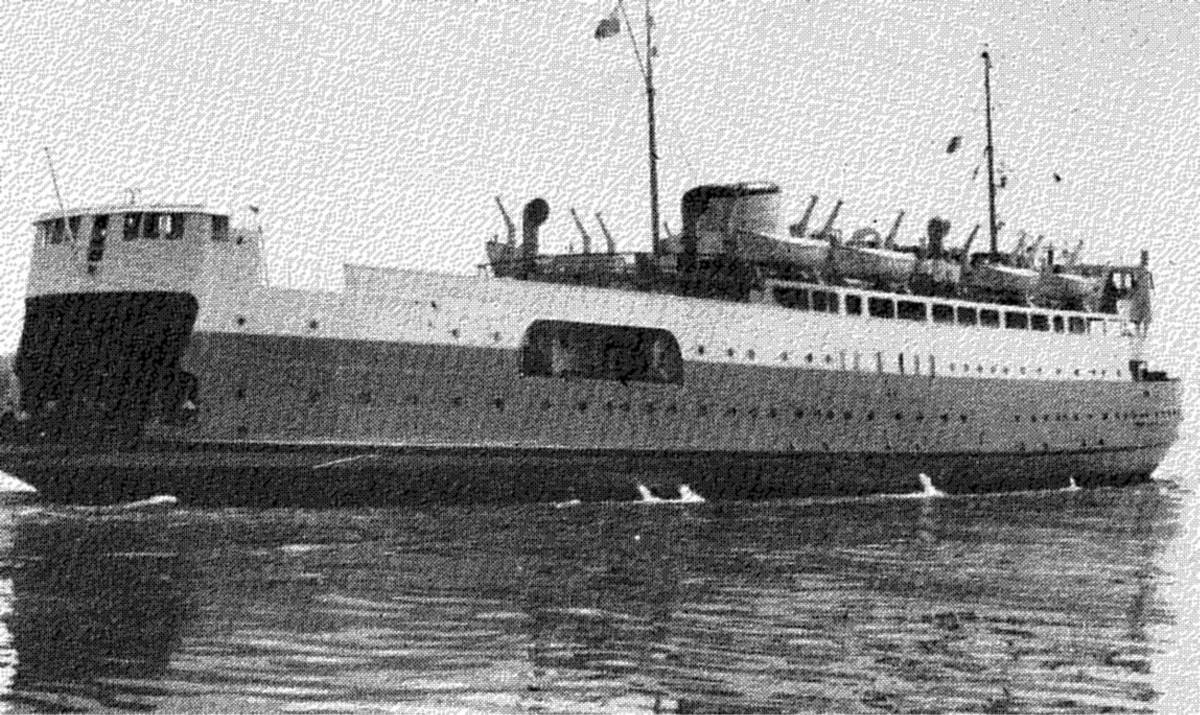
By 1947 a number of additions had been made, or were about to be made, to the vessels employed in ice-filled seas around Canada. The following notes have been compiled to supplement the photographs shown here.
These notes are based on an article in the "Arctic" magazine, Vol. 1. No. 2, updated and expanded.
The Abegweit
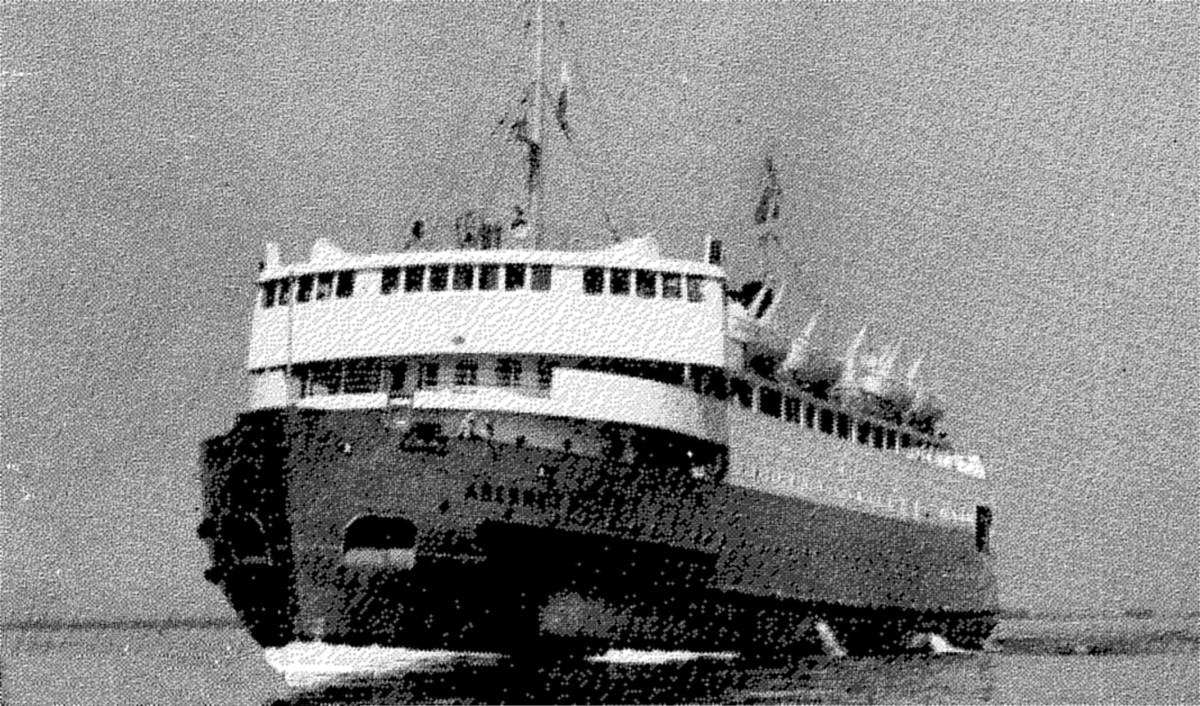
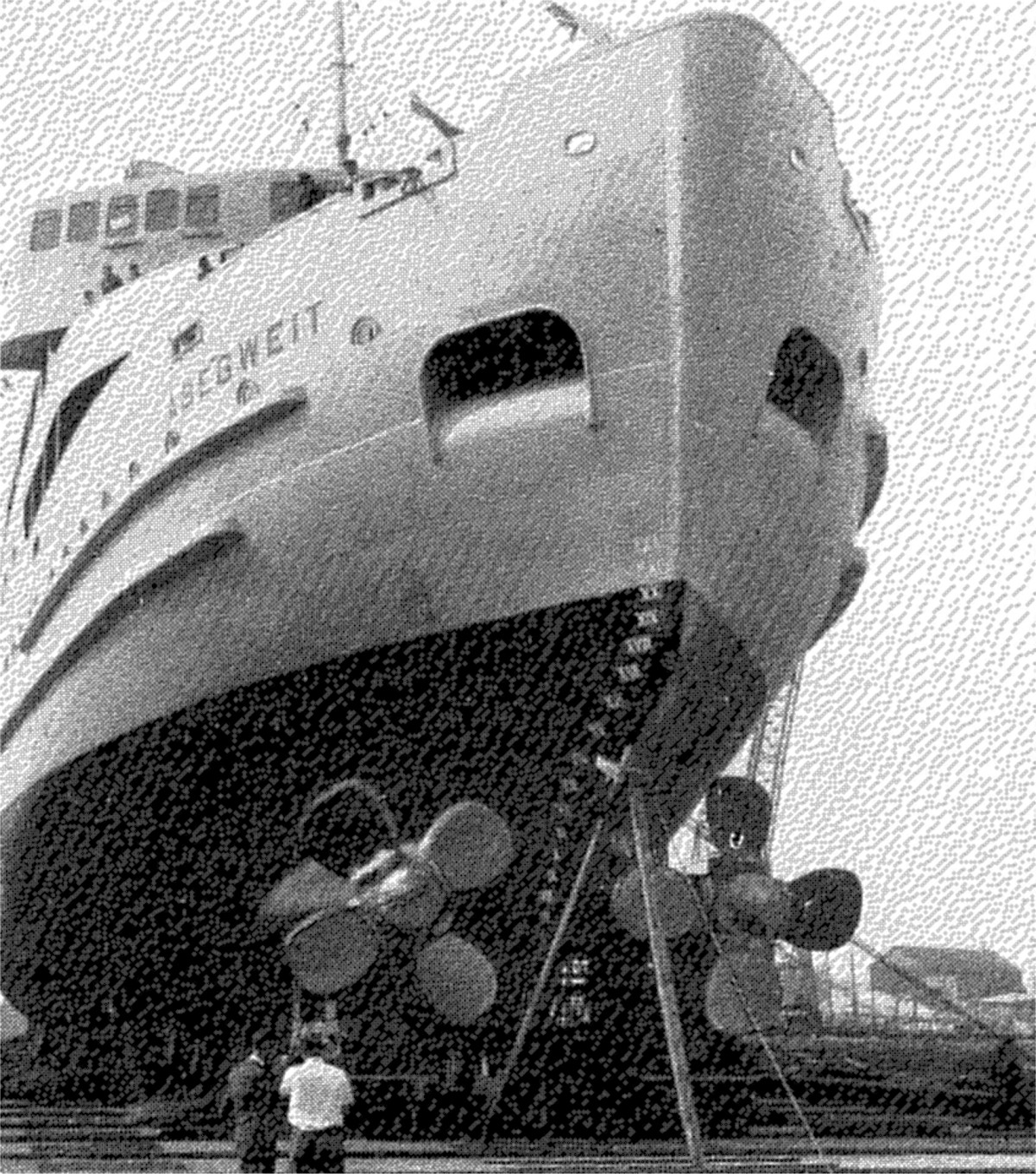
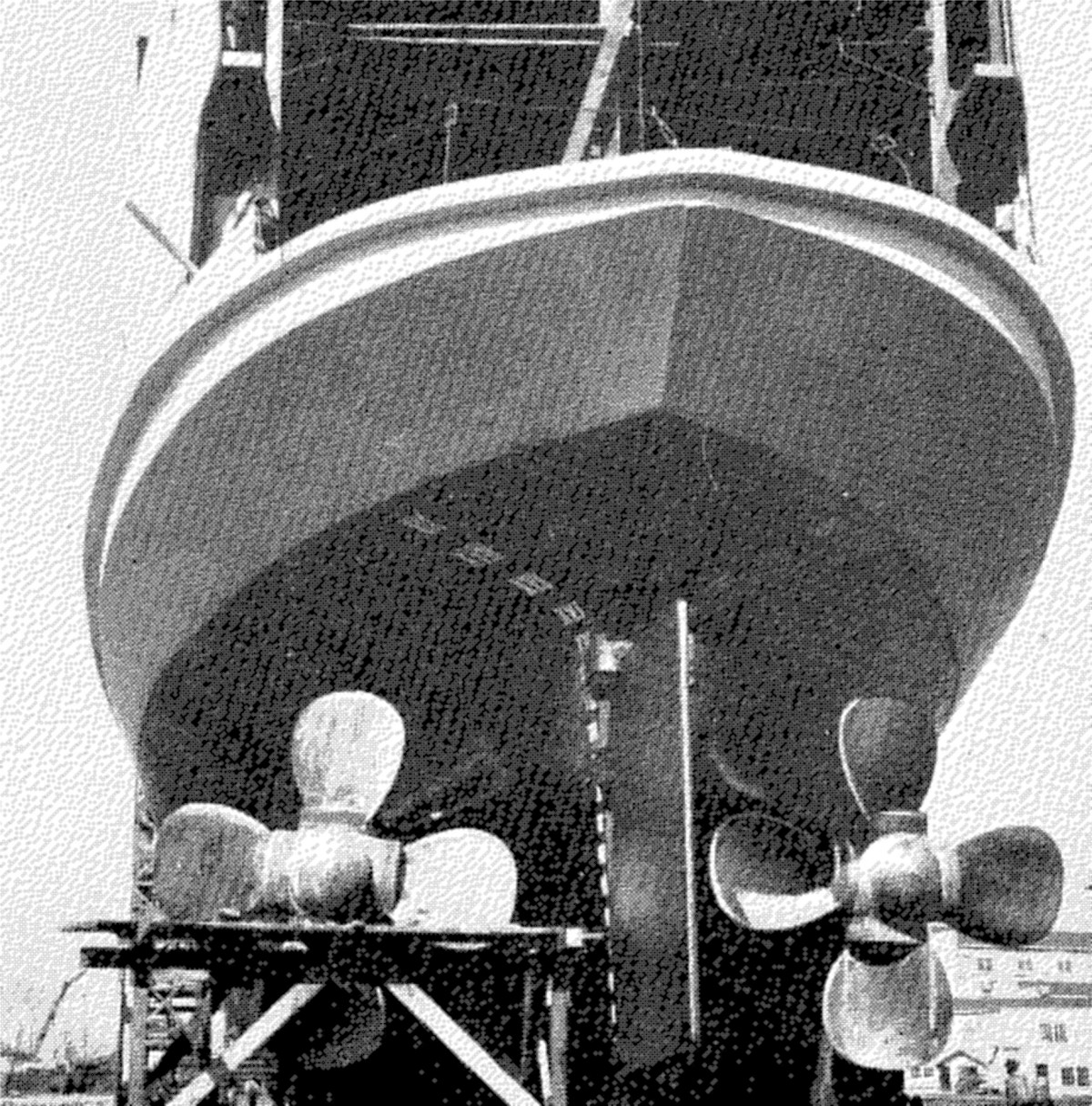
The first dependable service by train ferry across Northumberland Strait which separates Prince Edward Island from the Canadian mainland was provided in 1915 by a triple-screw vessel of 2,795 gross tons, the Prince Edward Island. A larger and more powerful vessel of 5,889 gross tons, the Charlottetown was added in 1931 and served successfully until her loss in 1941. In August 1947 SS Abegweit the world’s largest ice-breaking train ferry, having a gross tonnage of about 7,000 and powered with 12,000 b.h.p. engines began operating. Abegweit is quadruple-screwed and powered by 8 sets of Sulzer diesel-electric engines. Two of the propellers are fore and two aft, to increase manoeuvrability. Length of the vessel overall is 372’ 6” with an extreme draft of 19’ 0”. She can carry nineteen railway cars, sixty automobiles and 950 passengers. Ice conditions vary greatly from place to place in Canada. The particular problems needing to be met by the designers of Abegweit were :
- To be able to manoeuvre into wharves at either end of the crossing.
- To operate in the broken ice which is swept through Northumberland Strait and which some- times reaches a thickness of thirty feet.
- To provide maximum propeller thrust with the vessel stationary.
- To enable power to be transferred rapidly from the bow to the stern propellers and vice versa.
Experience with twin-screw Canadian icebreakers in the St. Lawrence River had shown that they were often more efficient when going astern than when going ahead. This, together with earlier experience on the Prince Edward Island route with bow propellers, led the designers to fit two of these in place of the former single propeller. In the first season under comparatively difficult conditions, Abegweit was never stopped by ice. Her speed normally 6-10 knots was on occasion reduced to 1-3 knots. When this happened a sudden increase of power on the two forward propellers produced a powerful rush of water along the ship’s side and quickly washed away the ice hindrance and increased the speed.
Abegweit is owned by the Canadian Government and operated by Canadian National Railways. It was designed by German and Milne of Montreal and built by Marine Industries Limited, Sorel, Quebec, Canada.
For a technical description of the vessel see: H. H. German “M.V. Abegweit, Prince Edward Island Car Ferry”, The Engineering Journal, January 1948, pp. 3-11. For a comparison with ten other contemporary ice-breakers see Characteristics of various icebreakers.
The Rupertsland
Hudson’s Bay Company Vessels
The Hudson’s Bay Company’s new Eastern Arctic vessel — the Rupertsland — which will be in service in 1949, will be called upon to do only a part of the work of the Nascopie. Much smaller in size her carrying capacity is 500 tons, exactly half of that of her famous predecessor. The new ship is of the most modern all-steel construction, entirely welded, and will be powered by two diesel engines developing 300 h.p. each and propelled by twin screws. An unusual feature is the propeller-housing known as Kort nozzles. These are steel tubes of a special design to increase the thrust of the vessel when steaming forward at slow speed in heavy seas or large ice fields. At the same time the tubes protect the propellers against ice. Comfortable accommodation will be provided for twelve Fur Trade person- nel, and ample refrigeration for carrying fresh foods into the far north. Like the Nascopie, she will be fitted with all the latest navigational aids, such as radar, echo sounder, gyro compass, etc., and her colouring wil also be similar—black hull, white deck houses, and buff funnel. With a crew of sixteen, M.V. Rupertsland will be ready for her transatlantic voyage from Glasgow, Scotland, early in 1949.
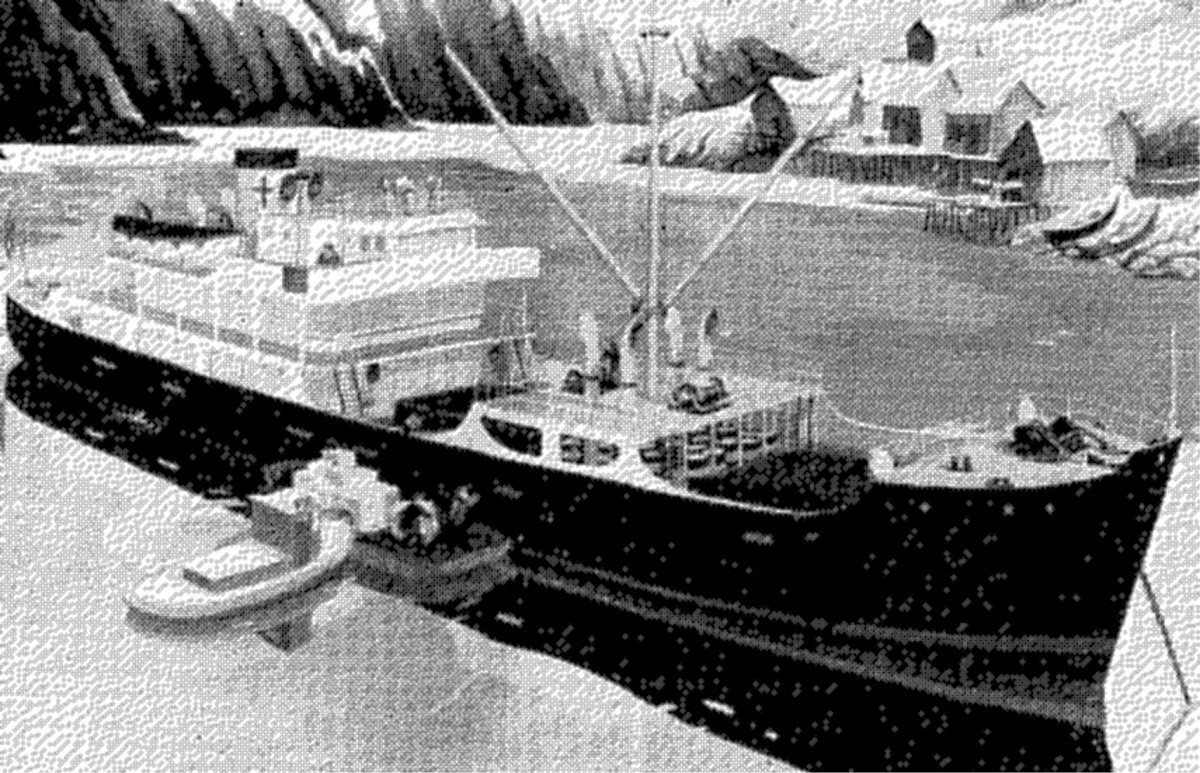
Another vessel, the Fort Hearne is at present under construction by W.C. McKay at Shelburne, Nova Scotia, for use in the western Arctic. Posts in that area are at present served by MV Fort Ross and the small schooner Nigalik. The new vessel is to be 140’ long with a 28’ beam and will be able to carry 400 tons of cargo. Power will be supplied by a 450 h.p. diesel engine. The hull is to be exceptionally strong not only because of ice conditions, during the navigation season, but because there are no facilities in the area for removing the vessel from the water, so that she will need to remain in the ice all winter. When the vessel leaves the builder’s yard in 1949 she will commence the long voyage to the western Arctic by way of the Panama Canal.
Eastern Arctic Patrol Vessel.
The annual patrol of the Canadian Eastern Arctic carried out regularly for more than a quarter of a century by the Administration of the Northwest Territories, will soon use a new vessel now under construction at Sorel, Quebec. The new ship was designed by German and Milne of Montreal. She will not be an ice-breaker in the usual sense of the term, but an ocean-going steam vessel, strengthened for use in ice. She is designed to carry 1000 tons of cargo and 88 passengers and to have a cruising range of 10,000 miles. When not in use by the Eastern Arctic Patrol, the vessel will service aids to navigation in the lower St. Lawrence and Atlantic coast region. Important dimensions are:-
- Length between perpendiculars: 276’ 0”.
- Draft: 18’ 0”.
- Speed: 134 knots.
- Deadweight tonnage: 2615.
- Engines: Two Uniflow steam engines, oil-fired, each of 2000 LH.P.
The hull is to be of metallic arc-welded construction throughout with special attention to scantlings and framings to withstand crushing by ice. In addition to the usual passenger and crew quarters there will be a hospital, mail room, laundries and refrigerated space. Special ventilation has been planned to eliminate condensation, and particular attention has been given to heating.